
Mental Health
Mental Health
Learning about mental health is crucial for us all to imagine a better future for everyone.
We have gathered information and advice from reliable websites that students and parents/carers will find useful during these unprecedented times. The information is not a substitute for professional advice, diagnosis, or treatment. If you or someone you know are experiencing what you believe are mental health symptoms, please consult with a trained medical professional or a licenced mental health provider.
If you feel you would like to talk to us about mental health, you can contact…..


Mental health is about all the emotions we feel as we go about our lives. This includes nice feelings such as happiness, love and gratitude, as well as difficult feelings such as anxiety, sadness and anger.
The word ‘mental’ just means ‘relating to the mind’ in the same way as the word ‘physical’ means ‘relating to the body’.
When we are mentally healthy, we are more able to enjoy life, cope with difficulties, believe in others, feel we have a place in the world, and believe we have something to offer to others. Having good mental health can protect us from physical health problems, and can help us be more resilient to stressful life events and less likely to develop severe mental health problems.
It’s really important to take care of yourself and look after your own mental health. If you are mentally healthy, you’ll be more able to support the children and young people you live with.
Looking after your own mental health
Parenting or caring for a child or young person can be tough. It’s important to make sure you look after your own mental wellbeing, as this will help you support yourself and those you care about.
Try to recognise and acknowledge when you’re feeling low or overwhelmed. Struggling with something or experiencing your own mental health problems does not make you a bad parent or carer.
It’s completely normal to be worried, scared or helpless during difficult times, and feeling this way is nothing to be ashamed of.
Is there a friend, fellow parent or carer you trust enough to tell how you’re feeling? Maybe there’s family, friends or a colleague who could support you or allow you a break?
There’s plenty of help out there. You should never feel like you have to cope on your own.

Young Minds has lots of support for parents, including a helpline and guidance around parenting with a mental illness.
Mind has information and suggestions on how to manage parenting with a mental health problem.
Scope has advice on managing stress when caring for a disabled child.
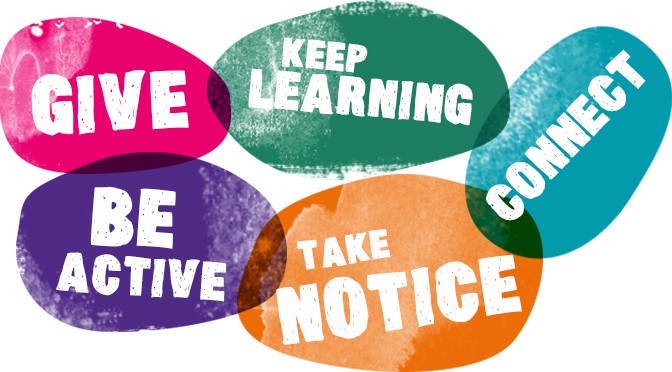
Five ways to wellbeing
- Connect…
With the people around you. With family, friends, colleagues and neighbours. At home, work, school or in your local community. Think of these as the cornerstones of your life and invest time in developing them. Building these connections will support and enrich you every day.
- Learn…
Try something new. Rediscover an old interest. Sign up for that course. Take on a different responsibility at work. Fix a bike. Learn to play an instrument or how to cook your favourite food. Set a challenge you enjoy achieving. Learning new things will make you more confident as well as being fun.
- Be active…
Go for a walk or run. Step outside. Cycle. Play a game. Garden. Dance. Exercising makes you feel good. Most importantly, discover a physical activity you enjoy and that suits your level of mobility and fitness.
- Take notice…
Be curious. Catch sight of the beautiful. Remark on the unusual. Notice the changing seasons. Savour the moment, whether you are walking to work, eating lunch or talking to friends. Be aware of the world around you and what you are feeling. Reflecting on your experiences will help you appreciate what matters to you.
- Give…
Do something nice for a friend, or a stranger. Thank someone. Smile. Volunteer your time. Join a community group. Look out, as well as in. Seeing yourself, and your happiness, as linked to the wider community can be incredibly rewarding and creates connections with the people around you.
Stress
Stress is the body’s reaction to feeling threatened or under pressure. It’s very common, can be motivating to help us achieve things in our daily life, and can help us meet the demands of home, work and family life. But too much stress can affect our mood, our body and our relationships – especially when it feels out of our control. It can make us feel anxious and irritable and affect our self-esteem. Experiencing a lot of stress over a long period of time can also lead to a feeling of physical, mental and emotional exhaustion.
Useful Websites
- NHS – Understanding Stress
- NHS – Every Mind Matters
- NHS – One You
Loneliness
Most people can feel lonely sometimes and for many different reasons, feelings of loneliness are personal, so everyone’s experience of loneliness will be different. Sometimes, you can still feel lonely even if you are surrounded by lots of people or have many friends. Loneliness is described as a person feeling empty, alone, or unwanted. People who suffer with loneliness often crave human contact, but their state of mind makes it difficult for them to form connections with others. If loneliness is affecting your life, there things you can try that may help. Admitting to your-self that you are struggling is not a sign that you are weak, but a massive step in the right direction. Try talking about your feelings to a friend, family member, health care professional or counsellor. Join a club or group.
Useful websites
Anxiety
A feeling of worry, nervousness, or unease, typically about an imminent event or something with an uncertain outcome. Anxiety is your body’s natural response to stress.
You’re not alone. 1 in 13 globally suffers from anxiety. The World Health Organisation (WHO) reports that anxiety disorders are the most common mental disorders worldwide.
Anxiety is a reaction in your body to danger, known as the “fight or flight response.” It’s actually of benefit to the body and a series of changes happen to the body when experiencing either response:
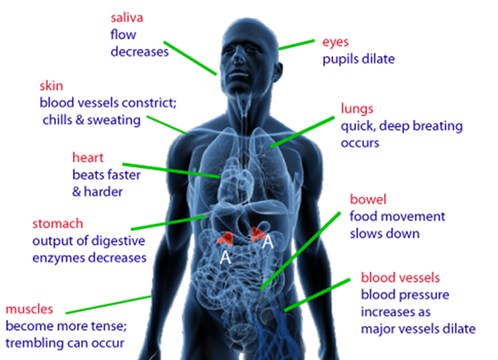
There is more than one type of anxiety. That means that you can experience anxiety in many different ways, and the idea that it has a specific meaning is a false one. Those that feel anxiety all the time are said to have “generalized anxiety,” since the anxiety is fairly persistent and recurring. However, there are other types of anxiety as well:
- Panic Attacks: Panic attacks are severe bursts of physical changes related to anxiety that resemble a heart attack. They have a mental component, and are almost entirely physical.
- Obsessions and Compulsions: Obsessions are persistent thoughts that cause fear, followed by compulsions – behavioral modifications and rituals that reduce some of the anxiety that happens with recurring thoughts.
- Phobias: Phobias are intense anxieties that are related to a specific event. Rather than general anxiety, where the anxiety is caused by multiple issues, phobias are fears of specific subjects that cause intense anxiety reactions, like a fear of spiders.
These are just a few of the many different types of anxiety. People can also experience some variation of the above, or experience some physical symptoms more than others.
Common Causes
- Anxiety is not always related to an underlying condition. It may be caused by:
- Stress that can result from work, school, personal relationship
- Emotional trauma
- Financial concerns
- Stress caused by a chronic or serious medical condition
- A major event or performance
- Side effect of certain medications
- Alcohol consumption, drugs such as cocaine
- Lack of oxygen
.
Treatment
- Self-treatment: Self- care steps that may be helpful in some less- serious cases:
- Exercise daily
- Maintain a positive attitude
- Get enough sleep
- Learn what triggers anxiety and alleviating it
- Eat well- balanced diets
- Practice relaxation techniques such as yoga
- Stop smoking and consumption of caffeinated drinks
See a doctor if you notice:
- The anxiety is interfering with daily tasks
- It after a previous history of anxiety
- The anxiety is accompanied by insomnia
- Depression is evident
See a doctor immediately if you notice:
- Suicidal thoughts
- That you are having a panic attack
Worry Management
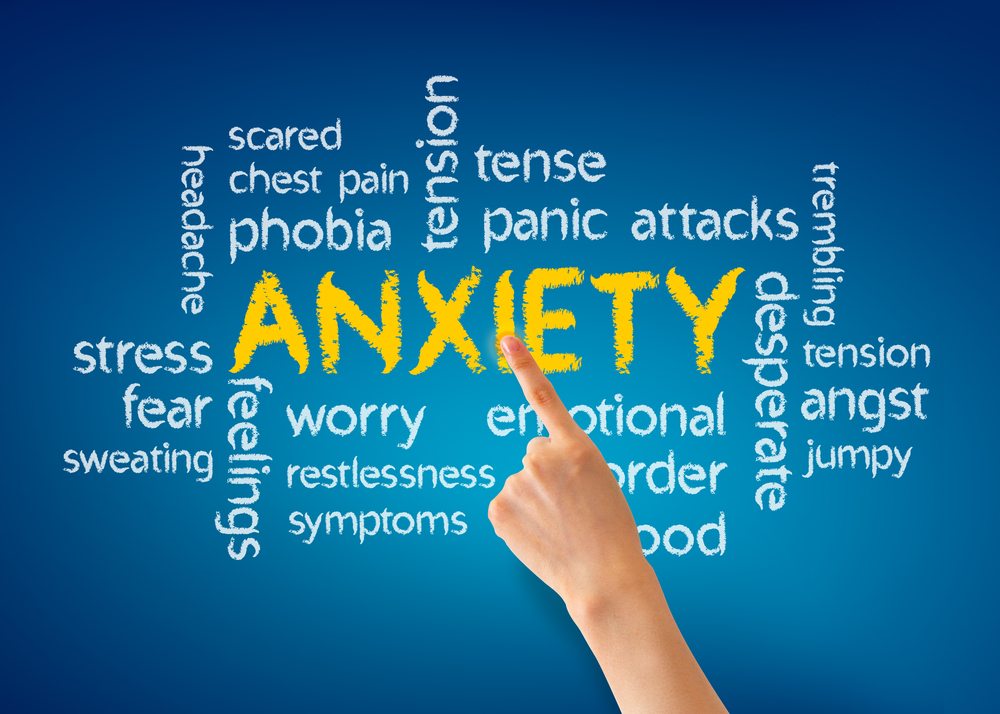
Worry management is a set of techniques to help reduce the impact of worrying or to solve practical problems. Worry management includes identifying and classifying worries initially then using either Worry Time or Problem Solving to manage
these.
There are two main types of worries; practical worries and hypothetical worries.
Practical worries are often about a current situation that you can do something about. For example this can include things like; “I have a tooth ache”. It is quite normal when we are feeling anxious or overwhelmed not to act on our worries and to start putting things off. However this often leads to our worries piling up and we can become overwhelmed and stuck in a vicious cycle.
Hypothetical worries are often about the future and what might happen. These worries are about things that we do not currently have control over and therefore cannot do anything about. Hypothetical worries often come in the form of a “what if”, for example; “What if the bus is late?” or “What if I do not pass the test next week?”. These worries can be very overwhelming and can lead to us worrying about worry; that it is making us ill or wearing us out.
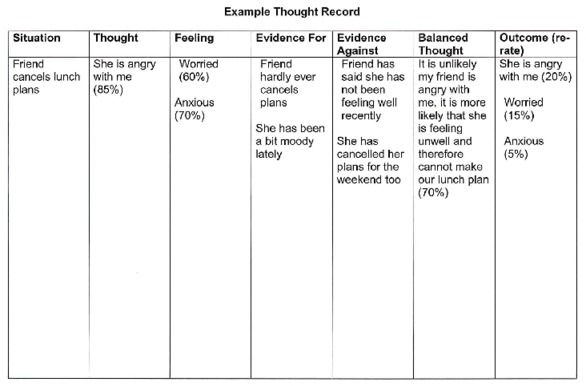
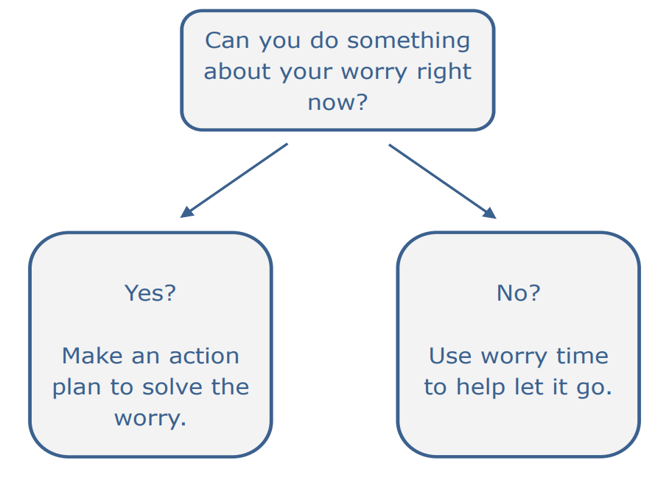
Worry time is a set period of time each day allocated to worrying. Worry time can be helpful in reducing the time we spend each day worrying, allowing us to enjoy our day to day lives. To do this follow the steps below;
STEP ONE: Choose your worry time. It is important to set aside, what you feel, would be a sufficient time each day for worry time, when you will not be interrupted or distracted. This time should ideally be in the evening, but not too close to bedtime, to mull over the days worries. It is important to stick to the same time each day in order to build a routine. You may find that the more you use worry time the less time you need each day, then you can reduce your worry time accordingly.
STEP TWO: Capture your worries. When you notice that you are worrying during the day, write them down. You can either chose to still use the worry diary, a notepad or even your phone to do so. If the worry is a practical worry, use problem solving to solve it. If the worry is a hypothetical worry go to step 3 of worry time. If you find that you are worrying a lot at night it can be useful to keep your diary or a note pad near your bed.
STEP THREE: Refocusing. Once you have captured your hypothetical worry and written it down it is then important to refocus. This may sound difficult at first, but remember you will spend time worrying about it later, in your scheduled worry time, meanwhile, refocusing involves paying attention to the present. Pay attention to whatever task you were doing when the worry came into your mind. Refocusing from our worries can be very difficult to do when we are not used to it, ways to refocus might be to engage in a different task, such as cooking, reading a book or exercise. Some people find that listening to music is a good way to refocus, find whatever is best for you to be able to attend to the present. When further worries come into your mind through the day, repeat the process. Write the worry down and then refocus on the present.
STEP FOUR: Worry time! When your worry time comes around, it is time to worry! Get out the list of hypothetical worries you have written down during that day and select a worry to start to worry about. It is useful to ask yourself questions about each worry;
- For each worry consider how you felt when you wrote the worry down and how you feel about it now, has this changed?
- Did the thing you were worrying about happen?
- If so, how did you cope?
- Are any of the worries no longer a problem?
- Would continuing to worrying about it during the day have made a difference?
- What could you be doing now instead of worrying?
Once you have done this for each of your worries and get to the end of the worry time it is important to stop worrying. You may find it helpful to destroy the list of worries– rip them up or throw them away at the end of each worry time and start with a fresh sheet every day. As you practise this technique you may find that outside of your worry time you are more able to manage the worries. As you progress with this technique you may find you are using less time than you originally thought each evening to worry. If this is the case you can reduce your allotted worry time in line with your current needs, you may find that eventually you don’t need this time at all. Also as you progress you may find it is not necessary to write down your worries and you can refocus without this step. If this is the case then continue in this way.
Mindfulness
Mindfulness is the basic human ability to be fully present, aware of where we are and what we’re doing, and not overly reactive or overwhelmed by what’s going on around us. It means slowing down to really notice what you’re doing and calmy accepting your feelings and thoughts . Being mindful is the opposite of rushing or multitasking. When you’re mindful, you’re taking your time. You’re focusing in a relaxed, easy way.
Research has shown that there are any benefits to practicing mindfulness is practiced . When we’re mindful, we reduce stress, enhance performance, gain insight and awareness through observing our own mind, and increase our attention to others’ well-being.
Mindfulness meditation gives us a time in our lives when we can suspend judgement and unleash our natural curiosity about the workings of the mind, approaching our experience with warmth and kindness—to ourselves and others.

Useful websites
Depression
It is normal for children and young people to have ups and downs in their mood. Their mood can be affected by a range of issues, and it is common for them to feel low when things are not going well for them. They may feel low in response to particular situations, such as parental separation, exam stress or falling out with friends.
Depression is more than simply feeling unhappy or fed up for a few days.
Most people go through periods of feeling down, but when you’re depressed you feel persistently sad for weeks or months, rather than just a few days.
Some people think depression is trivial and not a genuine health condition. They’re wrong – it is a real illness with real symptoms. Depression is not a sign of weakness or something you can “snap out of” by “pulling yourself together”.
The good news is that with the right treatment and support, most people with depression can make a full recovery
It’s important to seek help from a GP if you think you or a young person may be depressed. Many people wait a long time before seeking help for depression, but it’s best not to delay. The sooner you see a doctor, the sooner you/they can be on the way to recovery.
Bereavement
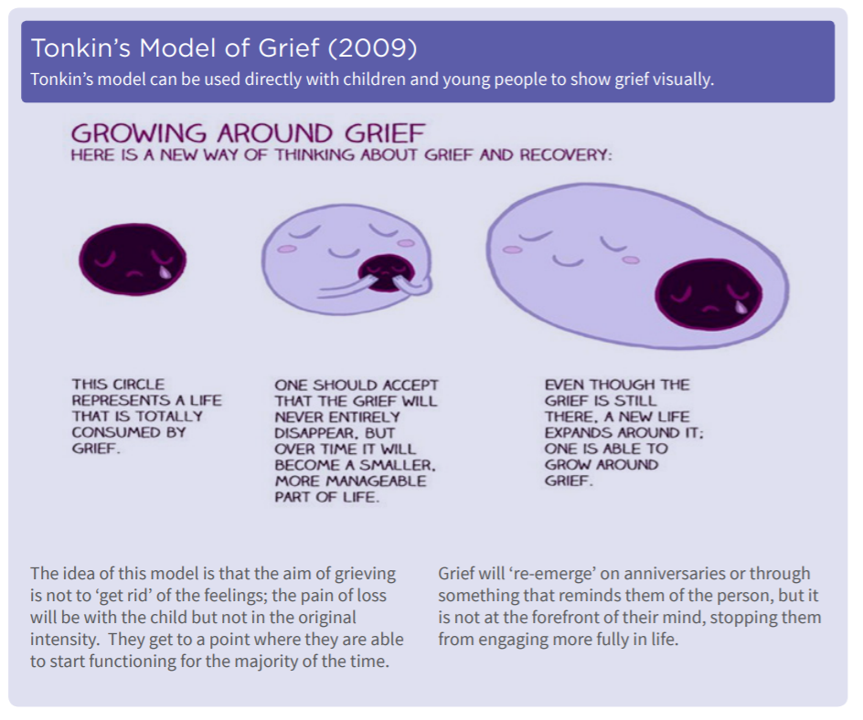
Bereavement refers to the whole process of grieving and mourning following the death of someone in your life, and is associated with a deep sense of grief and sadness. It is a natural process, but its impact can be overwhelming.
All children and young people will grieve when someone dies. It is important to remember that each child and young person’s reaction will be different and may change over time. Children can be supported by helping them to understand and express feelings and to cope and adapt.
- Experiencing the loss of a friend or loved one can be extremely difficult. The Childhood Bereavement Networkhas information and links to national and local organisations you or the child you look after might find helpful.
- Winston’s Wish – Information, advice and guidance on supporting bereaved children and young people during the coronavirus outbreak
- Cruse Bereavement Care have produced some tips about talking to childrenamong their wider resources about grief and coronavirus
Ways to help others
The coronavirus pandemic is leaving millions of people sick, unemployed, and struggling to make ends meet. Thankfully, there are many things you can do to help make a difference in your community from the safety of your home. Small and simple acts can make a big difference to a persons life.
- stay at home, it’s the best thing we can do right now.
- check on people, call friends and neighbours just to see how they are doing. A quick call or video chat may be the only contact some people have with another person that day.
- make some deliveries.
- spread good news and kindness.
- donate to your local food bank.
- make a meal for those you live with.
- read a story to a younger sibling.
- Kooth: free, safe and anonymous online counselling support.
- Anna Freud Centre for Children and Families: self-care to look after our own mental health.
- NHS : get medical help near you – ring 111
- If you’re concerned about a child or young person’s mental health, you can get free, confidential advice via phone, email or webchat from the Young Minds Parents Helpline.
- Action for Children has lots of tips to help you spot signs of mental health issues in children and advice on the action you can take to help.
- Barnardo’s has also set up the See, Hear, Respond support hub – a dedicated service to help children, young people and their families or carers with problems caused by the coronavirus outbreak.
- You can find more information about NHS children and young people’s mental health services (CYPMHS) on the NHS website.
- Do not hesitate to get urgent support if you think either you or your child needs it.