Schools and colleges and their staff are an important part of the wider safeguarding system for children (those under 18). Safeguarding and promoting the welfare of children is everyone’s responsibility, and everyone who comes into contact with children and their families has a role to play in ensuring they are safe and promoting their welfare. The statutory guidance related to keeping children safe is ‘Keeping Children Safe in Education 2025’. This guidance can be found here.
This guidance refers to safeguarding and promoting the welfare of children as:
- protecting children from maltreatment
- preventing the impairment of children’s mental and physical health or development
- ensuring that children grow up in circumstances consistent with the provision of safe and effective care, and
- taking action to enable all children to have the best outcomes.
School and college staff are particularly important, as they are in a position to identify concerns early, provide help for children, promote children’s welfare and prevent concerns from escalating. All staff have a responsibility to provide a safe environment in which children can learn and therefore, safeguarding refers to our wider responsibilities to ensure the school site, activities that are undertaken as part of their education, the monitoring of their attendance and the identification of concerns regarding child protection issues are all elements of safeguarding.
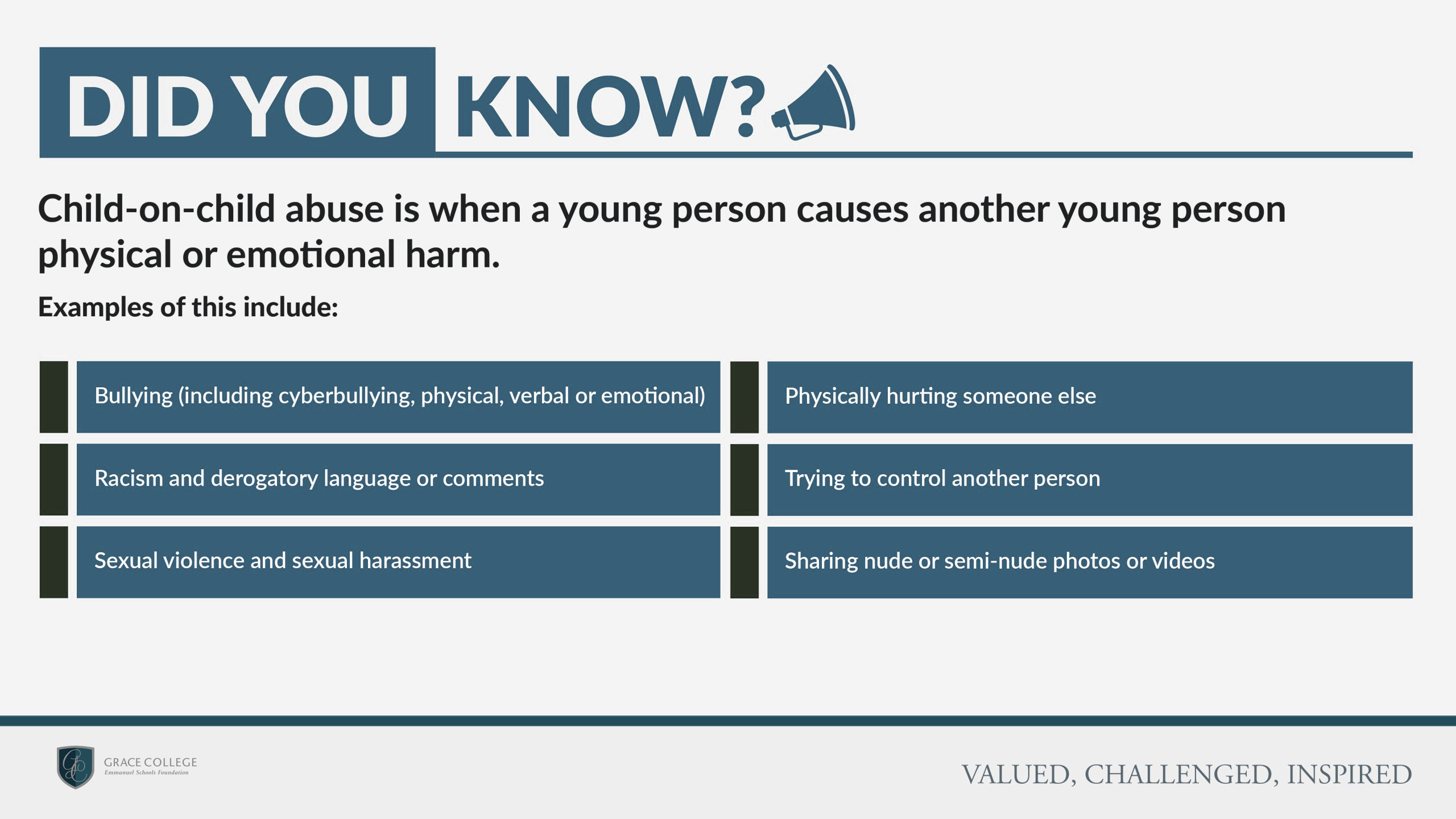
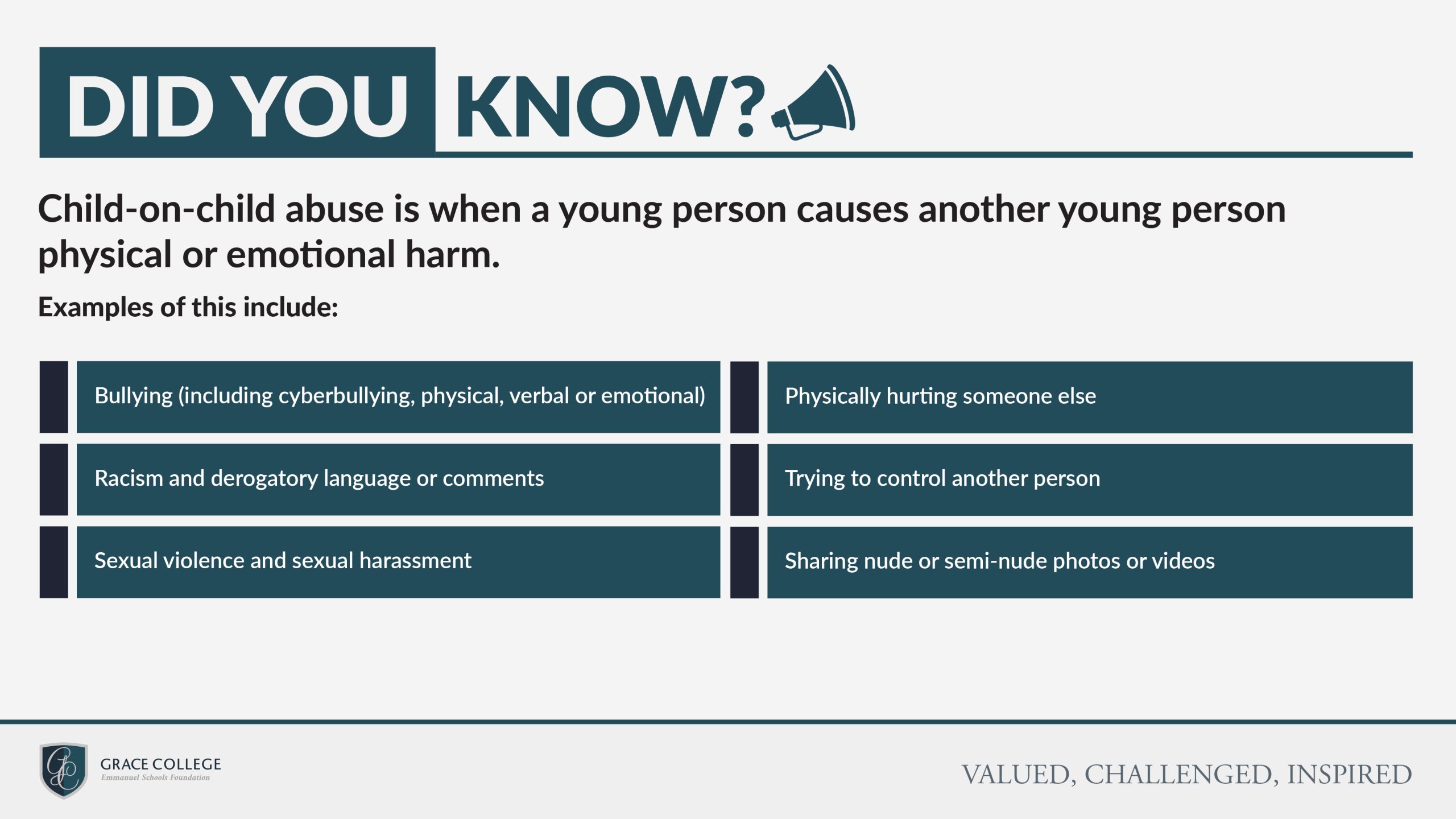
Governing bodies and proprietors should ensure there are appropriate policies and procedures in place, in order for appropriate action to be taken in a timely manner, to safeguard and promote children’s welfare. All staff should be aware of systems outlined in these policies within their school or college which support safeguarding through their induction and further professional development. The child protection policy includes the procedures to deal with child-on-child abuse.
These policies should include individual schools and colleges having:
- an effective child protection policy
- behaviour policy which includes measures to prevent bullying (including cyberbullying, prejudice-based and discriminatory bullying)
- a staff behaviour policy (sometimes called the code of conduct) which should, amongst other things, include low-level concerns, allegations against staff and whistleblowing, plus acceptable use of technologies (including the use of mobile devices), staff/pupil relationships and communications including the use of social media
- appropriate safeguarding arrangements in place to respond to children who go missing from education, particularly on repeat occasions.
All staff should also be aware of the role of the designated safeguarding lead (including the identity of the designated safeguarding lead and any deputies).
The Designated Safeguarding Leads





Below you will find links to both Grace College and Emmanuel School Foundation policies that relate to the safeguarding and welfare of children:
Grace College Policies
Child Protection Policies for Grace College are found on our policies page. These include:
1. Child Protection Policy
2. Behaviour and Discipline Policy
3. Attendance Policy
4. Student Code of Conduct
5. Child on Child Abuse Policy
6. Young Carer Policy
7. Self-Harm Policy
8. Bereavement Policy
9. Relationships and Sex Education Part B
10. Tackling Extremism and Radicalisation
ESF Policies
In addition to individual schools’ policies, a number of policies are governed by Emmanuel Schools Foundation:
1. ESF E-Safety Policy
2. ESF Health and Safety Policy
3. ESF Statement of Procedures for dealing with allegations of abuse against staff
4. ESF Relationships and Sex Education Part A
5. ESF Whistleblowing Policy
6. ESF Parent
7. Visitor Code of Conduct Policy
Reporting a concern about a child
Our child protection policy outlines the procedures in place at Grace College in relation to sharing concerns about a child. Anyone can share a concern about the welfare or safeguarding of a child directly with us, by contacting the safeguarding team here or by contacting Child Services at Gateshead Local Authority (contact details can be found in the child protection policy)